Ever wondered how a playful twist on old-world charm can change the look of luxury? Rococo style does just that with its smooth curves, soft pastel tones, and little pops of gold that turn simple objects into mini works of art.
Born in Paris when people wanted something lighter than the heavy, dramatic Baroque look, Rococo brings a relaxed elegance mixed with a touch of lavish flair. It’s like the style version of a friendly smile that makes everything feel a bit more special.
Step into a scene where delicate details and graceful shapes create a chic and cozy vibe. Imagine how these artful touches can give your outfit a timeless yet fresh feel, almost like discovering a secret style tip at your favorite boutique.
Defining Characteristics of Rococo Style
Rococo style first appeared in the mid-18th century as a lighter, airier take on the heavy feel of Baroque. It’s all about gentle curves and playful details that make every piece – whether a painting, a piece of furniture, or even a ceiling – feel thoughtfully arranged. Picture walking into a room where every decoration flows smoothly into the next, creating a warmth that is both grand and inviting. Essentially, Rococo turns everyday objects into art with its soft shapes and subtle, elegant touches.
- Curvy lines that sway like a gentle dance
- Light pastel colors that give a soft, mellow vibe
- Designs that aren’t perfectly balanced but feel exciting
- A hint of gold that adds a bright, luxurious feel
- Intricate details that show off careful, detailed handiwork
- Fun, playful arrangements that brighten up any space
- Pieces that all click together to create a harmonious look
These features make Rococo stand out by swapping strict, formal lines for a gentle and decorative style. Instead of hard symmetry and bold contrasts, Rococo leans into a relaxed and charming look. When you see the mix of soft colors, flowing forms, and delicate details all together, you quickly feel the shift from dramatic showiness to a more approachable, refined style in art and design.
Origins of Rococo Style and Historical Context

Rococo style first took shape in Paris during the Georgian Era, thriving from 1715 to 1780. Even though people only started calling it Rococo in the 19th century, its playful, detailed look was born right in Paris. Imagine artists and designers trading heavy, old-fashioned forms for curvy shapes and soft pastel colors that felt light and fun. It was like stepping into a chic Parisian salon where delicate decorations and gentle hues set a scene of relaxed luxury that enchanted the upper class.
Soon, this stylish trend left Paris and made its way to parts of Germany and Austria, and even Italy, with cities like Venice, Rome, and Milan adding their own special twists. Thanks to social changes during the early Industrial Revolution and support from the wealthy, Rococo became the go-to choice for anyone looking to brighten up their space or wardrobe with a touch of opulence.
Rococo Style in Painting and Sculpture
Rococo painters loved using soft pastel colors and light brush strokes that feel gentle and airy. Their artworks burst with playful myth tales and sweet, dreamy romance. Take Watteau's famous work, The Embarkation for Cythera (around 1717); it shows a smooth flow of movement and delicate details that make you want to pause and admire every graceful figure. Similarly, portraits of Madame de Pompadour capture tender looks and subtle hues that add to her charm. Every brushstroke feels like it’s sharing a little secret, making the work seem both spontaneous and lovingly crafted.
Sculpture around this time took on the same light, whimsical spirit seen in the paintings. Instead of heavy, stiff forms, artists like Edme Bouchardon created sculptures full of gentle curves. His figures have lovely, refined outlines and a soft play of light and shadow that mix classic strength with a playful, breezy touch. This blend of solid form with a touch of romance turns old themes into emotional and pleasing works of art. Each sculpture shows off neat, streamlined shapes and intricate details, making the art both impressive and easy on the eye, a refreshing break from the drama of past styles.
Rococo Architectural Style and Interior Designs
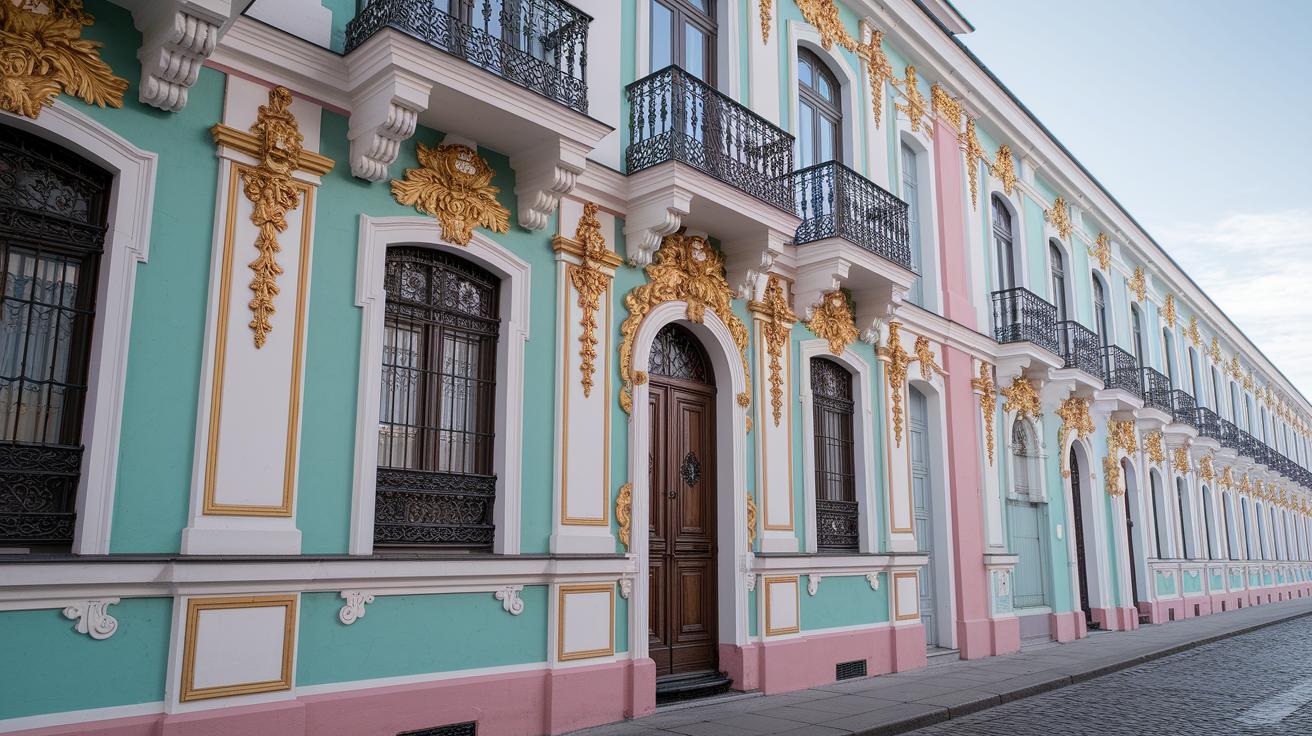
Rococo architecture is like turning a building into a living work of art. It dresses up each facade with swirling stucco patterns, soft pastel tones, and hints of gold that catch your eye. Every structure tells its own story with detailed ornaments and a balanced design that feels almost hand-painted. Plain walls become canvases celebrating fine craftsmanship and creative detail. Even the faces of buildings get a makeover with glimmering mirror panels and gentle curves, reflecting the rich and lavish vibe of the era. It’s a bit like stepping into a beautiful painting where every line and color is chosen to enchant you.
| Building | Location | Key Features |
|---|---|---|
| Amalienburg | Munich, 1734 | Exquisite gilding, stucco details, curvy ornaments |
| Hôtel de Soubise | Paris, 1735–40 | Mirror panels, intricate moldings, coordinated decorative schemes |
| Catholic Church Example | Vienna, mid-18th century | Richly decorated facades, soft pastel accents, ornate ceilings |
| French Hôtel Particulier | Paris, 18th century | Elegant stucco work, detailed murals, balanced ensemble design |
Inside these charming buildings, every element naturally comes together to tell a story of true opulence. Ceiling murals and finely crafted wall panels mix with shiny gilt accents and carefully picked furnishings to create spaces that feel grand yet welcoming. The art of combining paintings, metalwork, porcelain, and furniture into one smooth design is a hallmark of the Rococo style. This unified approach turns every room into a lavish setting that surprises and delights, inviting you to experience a slice of past splendor reimagined for today.
Rococo Style Inspires Opulent Allure
Rococo furniture is pure charm mixed with clever design. It brings art into daily life with its signature curved cabriole legs that seem to flow gently, adding movement and grace to every piece. The surfaces are decorated with rich marquetry, where fine patterns meet expert craftsmanship in a way that makes each item an eye-catching center of attention. Pastel upholstery and quirky, off-center designs give it a playful vibe, reminding us of a time when every detail was lovingly curated. Imagine a carved side table that almost seems to dance with its graceful curves, fitting right in whether your home is modern or has a vintage soul.
And then there’s the magic of accessories. Mirrors with ornate designs catch the light and elevate your room’s mood, while early chandeliers sprinkle a hint of delicate sparkle above. Porcelain elements, with their soft curves and refined details, complete the look by merging everyday use with a decorative twist. Artisans loved blending practicality with flair, creating pieces that aren’t just useful but also bring visual delight to your space. Each object carries the timeless spirit of Rococo design, turning everyday settings into a blend of historical grace and modern elegance.
Modern Reinterpretations of Rococo Style

Rococo's influence still dances through our lives today. Its playful spirit is alive in film sets and theme parks that capture the fun vibe of 18th-century salons. Picture walking into a space where every chair and decoration softly whispers vintage glamour with pastel shades and gentle, curvy lines. Many visitors don’t know that these enchanting settings draw a lot from Rococo design, mixing a taste of history with a modern twist that makes the magic feel real and inviting.
Runway shows have become their own kind of art canvas for this classic flair. Think back to Yves Saint Laurent’s Spring 1999 show, Dior’s Fall 2005 presentation, Balmain’s Fall 2012 display, Moschino’s Fall 2020 collection, Palomo Spain’s Spring 2024 event, and Chanel’s Haute Couture Fall 2024 spectacle. Designers like John Galliano, Christian Lacroix, Erdem, and Simone Rocha have taken Rococo’s sweeping curves, intricate detailing, and soft pastel colors and reimagined them for today's fashion scene. This playful mix of old and new proves that even centuries-old design can be refreshed, giving modern style lovers a touch of the past blended perfectly with contemporary chic.
Comparisons: Rococo Style versus Baroque and Neoclassicism
Rococo tones down the drama of Baroque by swapping heavy, dark colors for gentle, light hues and quirky designs. It’s like shifting from a grand, over-the-top show to a relaxed evening in a charming garden. Instead of bold, deep contrasts, Rococo plays with playful, off-kilter shapes that feel soft and inviting.
Rococo is also very different from Neoclassicism. Neoclassicism sticks to clear, strict lines inspired by ancient Greek and Roman art, favoring simple forms. In contrast, Rococo overflows with decorative details and smooth, flowing curves. Imagine a cozy room with swirling ornaments and soft pastels, as opposed to one with plain, rigid columns and clean lines.
When you stack Rococo against Renaissance art, the differences are even clearer. Renaissance art celebrated balance and perfect perspective, making everything look neat and orderly. Rococo, however, loves lively designs and rich surface details that burst with energy and charm. It feels spontaneous and full of personality, much like a delightful surprise that brightens your day.
Final Words
In the action, this piece highlighted the playful charm and ornate details that make rococo style so captivating. We traced its Parisian origins, admired the gentle pastel hues, and explored signature curvilinear forms that brought art, architecture, and furniture to life.
Every step reminded us that style can be fun and fluid, mixing history with modern flair. The celebration of rococo style inspires creative choices and lifts your everyday wardrobe. Enjoy the lightness and grace it adds to your fashion story.
FAQ
Q: What defines Rococo style furniture?
A: Rococo style furniture features curved legs and ornate details that blend art with function, offering a playful, light approach compared to more traditional, rigid designs.
Q: What characterizes Rococo style painting and art?
A: Rococo style painting and art emphasize pastel tones, smooth brushwork, and delicate details that create light, graceful scenes full of playful elegance.
Q: What sets Rococo style clothing and dress apart?
A: Rococo style clothing and dress showcase soft pastel colors, flowing silhouettes, and intricate ornamentation that mirror the era’s charming, decorative spirit.
Q: What are the key features of Rococo style architecture and interior design?
A: Rococo style architecture and interior design display ornate facades, curved lines, and refined details. They integrate elements like decorative beds and elegant furnishings to craft harmonious, spirited spaces.
Q: Is Marie Antoinette Rococo or Baroque?
A: Marie Antoinette is linked with Rococo, reflecting a softer, more playful aesthetic through intricate decoration rather than the dramatic intensity found in Baroque designs.
Q: What’s the difference between Baroque and Rococo?
A: The difference between Baroque and Rococo lies in their moods; Rococo uses light colors and playful curves, while Baroque relies on dramatic contrasts and grand, bold designs.
Q: Is Versailles Baroque or Rococo?
A: Versailles blends both styles; it features Rococo decorative details in its interiors alongside Baroque grandeur and scale, creating a rich mix of ornate expressions.
Q: What ended the Rococo style?
A: The Rococo style ended as cultural shifts and a move toward simpler, neoclassical designs reduced the era’s ornate, playful expressions in favor of more restrained aesthetics.

… [Trackback]
[…] Find More here on that Topic: leblooms.com/rococo-style/ […]
… [Trackback]
[…] Info to that Topic: leblooms.com/rococo-style/ […]
… [Trackback]
[…] Find More Information here on that Topic: leblooms.com/rococo-style/ […]
… [Trackback]
[…] Information on that Topic: leblooms.com/rococo-style/ […]
… [Trackback]
[…] There you will find 86650 additional Information to that Topic: leblooms.com/rococo-style/ […]
… [Trackback]
[…] Information to that Topic: leblooms.com/rococo-style/ […]
… [Trackback]
[…] Read More Info here to that Topic: leblooms.com/rococo-style/ […]
… [Trackback]
[…] There you will find 57913 more Information to that Topic: leblooms.com/rococo-style/ […]
… [Trackback]
[…] Information to that Topic: leblooms.com/rococo-style/ […]
… [Trackback]
[…] Find More Information here to that Topic: leblooms.com/rococo-style/ […]
… [Trackback]
[…] Here you will find 59533 additional Information on that Topic: leblooms.com/rococo-style/ […]
… [Trackback]
[…] Here you will find 60445 additional Information on that Topic: leblooms.com/rococo-style/ […]
… [Trackback]
[…] Information to that Topic: leblooms.com/rococo-style/ […]
… [Trackback]
[…] Information on that Topic: leblooms.com/rococo-style/ […]
… [Trackback]
[…] Read More Info here to that Topic: leblooms.com/rococo-style/ […]
… [Trackback]
[…] Here you can find 13403 more Information to that Topic: leblooms.com/rococo-style/ […]
… [Trackback]
[…] Find More here to that Topic: leblooms.com/rococo-style/ […]
… [Trackback]
[…] There you will find 65137 more Information to that Topic: leblooms.com/rococo-style/ […]
… [Trackback]
[…] Info to that Topic: leblooms.com/rococo-style/ […]
… [Trackback]
[…] Read More to that Topic: leblooms.com/rococo-style/ […]
… [Trackback]
[…] Here you can find 96769 additional Information to that Topic: leblooms.com/rococo-style/ […]
… [Trackback]
[…] Here you can find 29517 more Info to that Topic: leblooms.com/rococo-style/ […]